 Gallopa
How to Ride a Horse: A Beginner's Guide to Your First Lessons
- Learn with an instructor, never alone
- What a first horse riding lesson looks like
- What to wear horse riding
- How to mount and dismount a horse
- The basic position and how to hold the reins
- Walk on, stop and steer
- Your first trot
- When do you canter?
- Nerves, fitness and the day after
- How much do horse riding lessons cost?
- Your first ten lessons and how to progress
- FAQ
I learned to ride on a borrowed Welsh cob who had opinions about everything, and what I remember most from that first Saturday is not the riding. It is the smell of the tack room and the certainty that everyone else knew what they were doing. If you are wondering how to ride a horse and where to start, this is the guide I wish someone had handed me at the gate. The short version: you learn with an instructor, at a proper riding school, on a horse chosen for beginners.
Learn with an instructor, never alone
A horse is half a tonne of animal with its own reactions, and the classic beginner mistakes (gripping with the knees, tipping forward, hauling on the reins) are exactly the ones that cause falls. An instructor stops those habits before they form and puts you on a horse that has done this a thousand times. Nobody should teach themselves from videos.
In the UK, look for a BHS Approved Centre, inspected for instruction, horse welfare and safety. Search by postcode on the BHS find a riding centre page. In the US, the Certified Horsemanship Association certifies instructors and accredits facilities. Ask any school whether the instructors are qualified and whether they have quiet horses for complete beginners.
What a first horse riding lesson looks like
A first lesson is mostly about getting comfortable around the horse, nearly all of it at walking pace. Expect 30 minutes in the saddle and a little time on the ground first:
- You meet your horse. Some schools have you groom and help tack up, which is the fastest cure for nerves.
- You learn to lead from the near (left) side, at the horse's shoulder.
- You mount from a block with the instructor holding the horse.
- You walk on the lead rein, or on the lunge, where the instructor holds a long line and the horse circles so you can concentrate on yourself.
- You practise halts and turns, and if you are relaxed, a few strides of trot.
What to wear horse riding
You do not need to buy much for lesson one, but the hat and the boots are not optional:
- A riding hat to a current standard. PAS 015:2011, VG1 01.040, ASTM F1163 or SNELL E2016, each with its quality mark. BHS Approved Centres follow this exact hat list. Most schools lend hats; check it fits snugly and does not rock.
- Boots with a small heel and a smooth sole. About 2 to 3 cm of heel stops your foot sliding through the stirrup.
- Long trousers without a thick inside seam. Jodhpurs are ideal; leggings or stretchy jeans are fine to start.
- Gloves. Reins rub.
- A body protector, if the school offers one.
- Leave at home: trainers with deep tread, loose scarves, dangling jewellery, and hoodies with cords.
How to mount and dismount a horse
Always use a mounting block. It is kinder to the horse's back and to the saddle.
Stand on the block on the horse's left side, both reins in your left hand, short enough that the horse cannot wander but not tight. Left foot in the stirrup, right hand on the far side of the saddle, push up from your right leg, swing the right leg over without kicking the horse's quarters, and sit down softly.
To dismount, take both feet out of the stirrups first, lean forward, swing your right leg over behind you, and slide down to land on both feet with your knees bent. Keep hold of the reins.
The basic position and how to hold the reins
Picture a straight line from your ear, down through your shoulder and hip, to your heel. That is the whole of the basic position. Sit tall on your seat bones, legs hanging long, the ball of your foot on the stirrup and your heels a little lower than your toes. A low heel drops your weight into the stirrup and keeps you stable when the horse moves.
The rein passes between your little finger and ring finger, across your palm, and out between your thumb and first finger, thumb on top. Hands a fist's width apart, thumbs up, as if holding two mugs of tea, with a straight line from elbow to bit. Soft hands means a closed hand and a relaxed arm, never a locked elbow.
Walk on, stop and steer
To walk on, sit tall, look ahead and squeeze with both lower legs. Let your hands move slightly forward, and say "walk on", because most school horses know the words. The moment the horse moves, stop squeezing. Once walking, let your hips follow the swing rather than bracing against it.
To stop, do not pull. A horse can out-pull you every time. Instead, sit deep and stop following the movement with your hips. Close your fingers on the reins, as if squeezing water out of a sponge, and keep your legs lightly on so the horse stops straight. The moment it halts, soften your hands.
Pull-tip: if the horse does not stop the first time, do not pull harder. Sit deeper, close your fingers again, and give the horse a second to work it out. Timing wins this argument, never strength.
To steer, look where you want to go. Turning your head and shoulders shifts your weight, and the horse feels that before anything else. To turn left, open your left hand a little away from the neck, keep your left leg at the girth and move your right leg slightly back. Eyes and legs do most of the steering; hands do far less than beginners think.
Your first trot
The trot is a two-beat gait, the legs moving in diagonal pairs, and every beat throws you upwards. Sitting to it untrained feels like being bounced on a very hard sofa.
Rising trot is the fix: you let the horse lift you out of the saddle on one beat and sit back softly on the next. When it clicks, usually between your third and sixth lesson, the bounce disappears. Later your instructor teaches you the diagonal, rising as the outside foreleg goes forward and sitting one extra beat to change if you are on the wrong one. Sitting trot comes after that. Our guide to horse gaits explains what the legs are doing under you.
When do you canter?
Honestly, later than most beginners hope. Riding once a week, canter usually arrives after two to four months. Canter needs a rider who can already keep a balanced position in trot, stop reliably and steer without thinking. Rush it and you get a nervous rider hanging on the reins. Your instructor will tell you when you are ready, and that day feels like flying.
Nerves, fitness and the day after
Every rider was frightened once. Sitting on a large animal that can move without your permission is a reasonable thing to be nervous about, and good instructors know it. They put nervous riders on the steadiest horse in the yard, keep early lessons on the lead rein or lunge, and go at your pace. Say out loud if you are scared.
Riding works your core, your inner thighs and your balance. After your first lesson you will discover muscles you did not know you owned. That soreness fades after two or three lessons. You do not need to be fit to start, but gentle core work and hip stretches between lessons help.
How much do horse riding lessons cost?
Prices vary a great deal by region and school, so treat these as rough ranges. In the UK, EC Pro's 2026 price data, reported by Horse & Rider magazine, puts a 30-minute adult group lesson at around £35 on average, with a one-hour adult group lesson costing up to £53 in the South East. Private lessons cost more.
In the US, Airtasker's price guide gives $30 to $80 per person for a group lesson and $45 to $100 for a private hour. Wherever you are, ask about beginner packages.
Your first ten lessons and how to progress
Here is what ten lessons at a decent school typically cover.
| Lessons | What you learn | What good looks like |
|---|---|---|
| 1 to 2 | Leading, mounting, position, walk, halt, basic steering | Walk, stop and turn on the lead rein without tension |
| 3 to 4 | Walk off the lead, first trot, beginning rising trot | Rhythm in rising trot for a few strides at a time |
| 5 to 6 | Rising trot on both reins, transitions, arena figures | Trot a full circuit and steer a 20 metre circle |
| 7 to 8 | Correct diagonals, sitting trot, trot without stirrups | Lower leg still and hands level in trot |
| 9 to 10 | Confident trot work, poles, preparing for canter | Your instructor starts talking about your first canter |
After that, private lessons move you faster, and group lessons cost less and teach you to ride around other horses. Two rides a week beats one. Later, once you can ride independently in all three paces, sharing or loaning a horse is the traditional next step, and far cheaper than buying.
Beginner progress is invisible from the inside, so track it. A horse riding tracker like Gallopa logs your minutes in walk and trot and the route you rode, so eight minutes of trot in lesson ten looks very different from ninety seconds in lesson three. When you start riding between lessons, our guide to improving between lessons has a plan, and once canter arrives, how much trot and canter per ride helps you build it sensibly. If a friend films you, an AI riding coach can score your seat, hands, leg, rhythm, transitions and harmony from the video.
FAQ
Is horse riding hard to learn?
The basics are not hard, but they take repetition. Most beginners can walk, halt and steer in their first lesson and find a rhythm in rising trot within a month of weekly lessons. Doing it all softly and consistently is the hard part.
How long does it take to learn to ride a horse?
With one lesson a week, expect to trot confidently in two to three months and canter in three to six. Riding independently in all three paces usually takes six months to a year. Riding twice a week roughly halves those times.
What should I wear for my first horse riding lesson?
A riding hat to a current standard (most schools lend one), boots with a small heel and a smooth sole, long stretchy trousers, and gloves. Avoid trainers, loose scarves and anything that dangles.
How much do horse riding lessons cost?
In the UK, a 30-minute adult group lesson averages around £35, and an hour can reach £53 in expensive regions. In the US, group lessons run roughly $30 to $80 and private lessons $45 to $100 an hour. Prices vary a lot by area, so ask about beginner packages.
Can adults learn to ride a horse?
Absolutely, and adult beginners are common at every riding school. Adults often grasp the theory faster than children, though they carry more tension and more fear of falling. A patient instructor and a steady horse solve both.
You will forget most of what happens in your first lessons. Gallopa is free on the App Store: it tracks every ride on iPhone and Apple Watch, detects walk, trot, canter and gallop automatically, and keeps a riding journal of your progress from lesson one. Download it before your first lesson, and in a year you will see exactly how far you have come.
Track it, don't guess it.
Gallopa records your route, speed and time in every gait automatically, and its AI coach reviews your riding videos. Free on iPhone and Apple Watch.

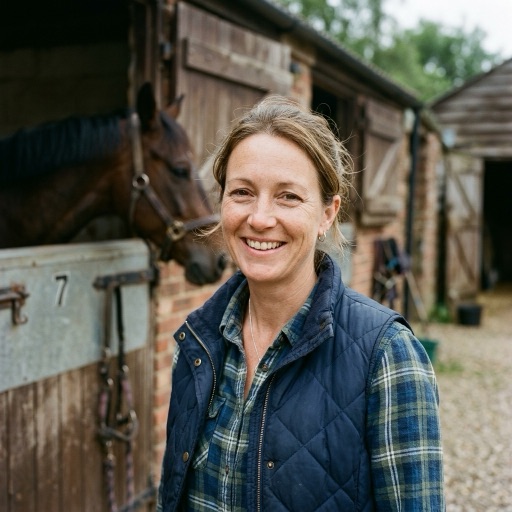
Emma has spent over thirty years around horses, from a Pony Club childhood on a borrowed Welsh cob to adult life combining low-level eventing, hacking and far too much time reading about training theory. She writes Gallopa's riding and horse fitness guides, and her rule for every piece is simple: if she would not act on it with her own horse, it does not get published.