 Gallopa
How Far Can You Ride a Horse in a Day? A Realistic Guide
It is one of the most-asked questions in riding, and the honest answer is "it depends," which is useless unless you know what it depends on. A soft horse on a hot day and a conditioned endurance horse on good going are separated by a factor of five or more. Here are realistic numbers for each kind of horse and ride, what actually limits the distance, and how to find out what your own horse is capable of.
How Far Can You Ride a Horse in a Day? The Short Answer
For an average, reasonably fit horse in light work, a comfortable day's ride is around 25 to 40 km (15 to 25 miles) at a mix of walk and trot. A fit horse conditioned for distance can cover 50 to 65 km in a day without strain. At the extreme, elite endurance horses complete 160 km (100 miles) in a single day, but that takes years of conditioning, a support crew and vet checks along the way.
The number most leisure riders should hold in their head is the first one. If your horse is hacked a few times a week and schooled, a 30 km day is a real day out, not a casual afternoon, and it should be built up to rather than sprung on the horse.
| Horse and ride type | Realistic distance in a day | Pace |
|---|---|---|
| Leisure horse, occasional hacks | 15 to 25 km | Mostly walk, some trot |
| Fit riding-club horse | 25 to 40 km | Walk and trot, short canters |
| Horse conditioned for distance | 50 to 65 km | Steady trot with walk breaks |
| Trained endurance horse | up to 160 km | Managed pace, vet checks |
What Actually Limits the Distance
Distance in a day is capped by the horse's fitness and soundness long before the rider's patience runs out. The main limits are stamina, which conditioning builds slowly over weeks; the going underfoot, since hard roads and deep mud both take a heavy toll; the weather, because heat and humidity cut safe distance dramatically; and the horse's feet and legs, which are where overreaching for distance does its damage.
Pace matters enormously, and not in the direction beginners expect. A day covered mostly at walk and steady trot is far more sustainable than one with lots of canter, because the faster gaits cost the horse much more per kilometre. This is the same logic behind how conditioning plans are built, which we cover in the guide to how much trot and canter a ride needs. The tortoise genuinely does win the distance game.
The Endurance Benchmark
The upper limit is worth understanding even if you never chase it, because it shows what the horse is built for. Endurance riding, the discipline governed in the US by the American Endurance Ride Conference, runs races of 80 to 160 km in a day, with compulsory veterinary checks that pull any horse whose heart rate does not recover or that shows the slightest lameness. As Wikipedia's overview of endurance riding notes, the winning horse is not simply the fastest but the one that finishes "fit to continue."
That phrase is the whole philosophy of long-distance riding in four words. The vet gate rewards the rider who managed the horse's pace and recovery, not the one who pushed hardest, and it is a useful mindset even on a long hack: the goal is a horse that could happily do it again tomorrow.
How to Build Up Your Horse's Distance Safely
You cannot shortcut condition. A horse coming back into work needs weeks of steady walk and trot before long days are fair, a progression the British Horse Society's fitness guidance lays out in detail. Add distance gradually, watch recovery rather than effort, and treat any heat, stiffness or reluctance as the horse telling you to stop for the day.
Pull-tip: on a long ride, your horse's recovery in the walk breaks tells you more than any distance target. If the breathing settles quickly, there is more in the tank; if it stays heavy, you have reached today's limit whatever the map says.
Feet and saddle fit deserve a mention, because both change as a horse gets fit and both end more long rides than stamina does. Have the saddle checked before you start building distance, and keep the horse's feet in good order, since a long day magnifies any small problem in either.
How to Measure Your Own Rides
All of these numbers are averages, and the only distance that matters for planning is your own horse's. That is where measuring beats guessing. A GPS tracker turns every hack into data: how far you actually went, at what pace, and in which gaits, so you can build distance deliberately and see your horse's fitness improve over weeks.
I use Gallopa, a free iPhone and Apple Watch app that records the route and detects walk, trot, canter and gallop automatically, so I know a hack was 18 km at mostly walk rather than the "maybe 10" I would have guessed. Whatever tool you use, the habit is the valuable part: log the same routes, watch the average pace and recovery, and let the real numbers guide how far you ask for next time. Our guide to riding metrics worth tracking goes deeper on which of those numbers actually matter.
Guessing at distance is how horses get overfaced and how riders get lost planning a route. Measuring it is how a 30 km day becomes a known, repeatable thing rather than a hopeful one.
FAQ
How far can a horse travel in a day?
An average fit riding horse comfortably covers 25 to 40 km (15 to 25 miles) in a day at walk and trot. A horse conditioned for distance manages 50 to 65 km, and trained endurance horses complete up to 160 km in a single day. An unfit or older horse should do considerably less and build up gradually.
How far can you ride a horse without stopping?
Not far at speed, and further than you would think at walk. At a gallop a horse can only sustain a few kilometres; at canter, a few minutes per block. But at walk and steady trot, with the odd breather, a fit horse can keep going for hours, which is how the big daily distances are covered. Long distance is a walk-and-trot game, not a fast one.
How many miles can a horse gallop?
Very few. A true gallop can usually be held for only two to four kilometres before the horse must pull up, and pushing past that risks injury. Distance riding is done almost entirely at walk and trot precisely because the fast gaits cannot be sustained. Judge a long ride by the slow miles, not the fast ones.
How do I know how far I have ridden?
Use a GPS tracking app on your phone or Apple Watch. It records your exact route and distance automatically, so you replace guesswork with a real number. Gallopa does this for free and also shows your time in each gait, which tells you not just how far you went but how hard the horse actually worked.
How long does it take to condition a horse for long-distance riding?
Weeks to months, depending on the starting fitness and the target distance. A horse coming back into work needs several weeks of walk and trot before long days are fair, then a gradual build with recovery watched at every step. There is no safe shortcut, because tendons and ligaments strengthen far more slowly than stamina does.
If you would rather know your real distances than guess at them, Gallopa is free on the App Store. It tracks every ride from your iPhone or Apple Watch, maps the route, measures the distance and detects your gaits automatically, so building your horse's fitness runs on real numbers from the first hack.
Track it, don't guess it.
Gallopa records your route, speed and time in every gait automatically, and its AI coach reviews your riding videos. Free on iPhone and Apple Watch.

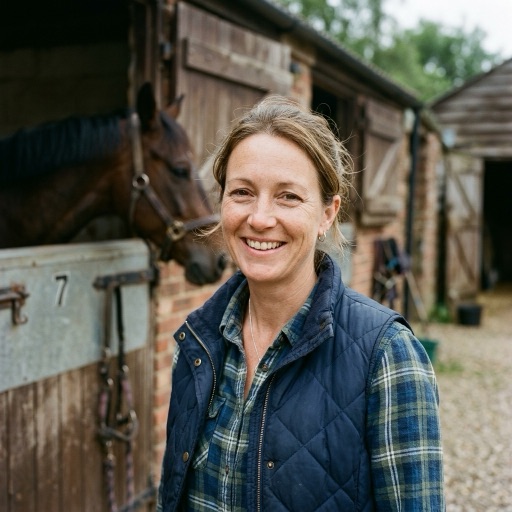
Emma has spent over thirty years around horses, from a Pony Club childhood on a borrowed Welsh cob to adult life combining low-level eventing, hacking and far too much time reading about training theory. She writes Gallopa's riding and horse fitness guides, and her rule for every piece is simple: if she would not act on it with her own horse, it does not get published.