 Gallopa
How Fast Can a Horse Run? Horse Speed by Gait and Breed
Ask how fast a horse can run and you will hear everything from "about 30 mph" to tales of 55 mph sprints. Both are right, for different horses on different days. A horse's speed depends on the gait it is in, its breed and build, its fitness, the ground and how far it has to keep the pace up. Here are the real numbers, from a quiet walk to the fastest sprint ever clocked, and how to find out what your own horse actually does.
How Fast Can a Horse Run? The Short Answer
A fit horse gallops at around 40 to 48 km/h (25 to 30 mph). Racing Thoroughbreds sustain roughly 60 km/h (37 mph) over a race, and the fastest recorded race speed is 70.76 km/h (43.97 mph), set by the Thoroughbred Winning Brew over two furlongs in 2008, as verified by Guinness World Records. Quarter Horses, bred for exactly this job, have been clocked around 88 km/h (55 mph) in short sprints.
Those are elite numbers on prepared ground. Your average riding horse cantering up a field is doing something far more modest, and that is worth knowing before you compare your GPS readout to a racehorse.
Average Horse Speed by Gait
Each gait has its own speed range, and they overlap between horses: a big horse's strong trot can match a pony's canter. For the footfall patterns behind these numbers, see our full guide to the four horse gaits.
| Gait | Typical speed | In mph | Sustainable for |
|---|---|---|---|
| Walk | 6 to 7 km/h | about 4 mph | Hours |
| Trot | 10 to 15 km/h | 6 to 9 mph | Long stretches with breaks |
| Canter | 16 to 27 km/h | 10 to 17 mph | Several minutes per block |
| Gallop | 40 to 48 km/h | 25 to 30 mph | A few kilometres at most |
| Racing gallop | 60 to 70 km/h | 37 to 44 mph | Under two minutes |
The baseline gait speeds are set out in Wikipedia's overview of horse gaits; the sustainable durations are where fitness, breed and common sense come in.
The Fastest Horses: Sprinters vs Stayers
Breed changes the answer dramatically. The American Quarter Horse is the fastest horse on earth over a quarter mile, hitting up to about 88 km/h (55 mph) in a straight-line sprint before speed falls away. The Thoroughbred is slightly slower at peak but holds close to 60 km/h for a mile or more, which is why it rules distance racing. Arabians are slower still at a gallop, yet win 160 km endurance rides at average speeds no other breed can hold for that long.
It is the same trade-off you see in human sprinters and marathoners. Muscle built for explosive speed tires quickly; muscle and metabolism built for stamina cannot match the top-end number but can repeat it all day.
How Long Can a Horse Keep It Up?
A horse cannot gallop for an hour, whatever films suggest. At a true gallop most horses need to pull up after three or four kilometres at most, and pushing past that point risks injury and genuine distress. At canter, a fit horse manages blocks of several minutes with breathers between. At trot and walk, a conditioned horse can cover ground for hours, which is how endurance horses log 100 miles in a day at an overall average of 15 to 20 km/h including holds.
Pull-tip: on a hack, your maximum speed says far less about your horse's fitness than how quickly breathing settles afterwards. A horse that recovers within a few minutes of a canter was working inside its capacity; one still blowing ten minutes later was not.
Fitness changes these numbers more than breed does at riding-club level. A horse coming back from a winter off needs weeks of walk and trot before sustained canter work is fair, a progression the British Horse Society's fitness guidance lays out well.
What Speeds Will You Actually See on a Ride?
Riders who start tracking their rides are usually surprised in both directions. The canter that felt like flying comes out at 20 km/h, and the "little trot" up a good track turns out to have touched 16. On a typical one-hour hack with mixed gaits, average speed lands somewhere between 6 and 9 km/h, because walk dominates the clock even on a forward ride.
That average is a genuinely useful fitness number. Ride the same loop every couple of weeks and watch the average speed and the recovery: if the same route is getting faster at the same effort, your horse is getting fitter. Our guide to riding metrics worth tracking goes deeper on which numbers matter and which are noise.
Measuring Your Own Horse's Speed
You do not need a racetrack to get real numbers, just GPS. A phone in your pocket or a watch on your wrist samples your position every second and turns it into live speed, distance and time in each gait. Gallopa does this automatically on iPhone and Apple Watch: it records your route, current, average and top speed, and detects walk, trot, canter and gallop as you ride, with a full ride tracker history so you can compare weeks against each other.
Two practical notes on GPS top speeds. First, ignore single-second spikes; a brief signal wobble can add a few km/h, so trust the sustained reading over the one-off peak. Second, measure your fast work on safe, open ground you know, not on a whim on a hard track. The number will still be there next week; tendons are less forgiving.
FAQ
How fast can the average horse run?
Most fit riding horses gallop at 40 to 48 km/h (25 to 30 mph) in short bursts. Racing Thoroughbreds average around 60 km/h (37 mph) over a race distance, and elite Quarter Horses reach about 88 km/h (55 mph) in quarter-mile sprints. An unfit or older horse may top out well below 40 km/h, and that is completely normal.
What is the fastest horse speed ever recorded?
The fastest race speed verified by Guinness World Records is 70.76 km/h (43.97 mph), set by the Thoroughbred mare Winning Brew over two furlongs at Penn National in 2008. Quarter Horses have been timed faster still, around 88 km/h (55 mph), in short straight-line sprints outside official race records.
How long can a horse gallop without stopping?
At a true gallop, most horses need to pull up after roughly three to four kilometres, and well before that if unfit or on heavy ground. Canter can be sustained in blocks of a few minutes with walk breaks. For genuinely long distances horses travel at walk and trot, which is how endurance horses cover 100 miles in a day.
How fast is a canter compared to a gallop?
A typical canter sits between 16 and 27 km/h (10 to 17 mph), while a gallop starts around 40 km/h (25 mph) and climbs from there. They are different gaits, not just different speeds: the canter's three-beat rhythm breaks into four beats at gallop and the horse stretches into a longer, flatter stride.
How can I measure my horse's speed for free?
Use a GPS tracking app on your phone. Gallopa is free on the App Store and records speed, distance, route and time in each gait automatically from your iPhone or Apple Watch, so you can see your true canter speed and watch your averages improve as fitness builds.
Next time someone quotes a 55 mph horse at you, you will know the context behind the number, and with a tracker running on your own rides, you will know your horse's honest numbers too. That beats guessing, every ride.
Track it, don't guess it.
Gallopa records your route, speed and time in every gait automatically, and its AI coach reviews your riding videos. Free on iPhone and Apple Watch.

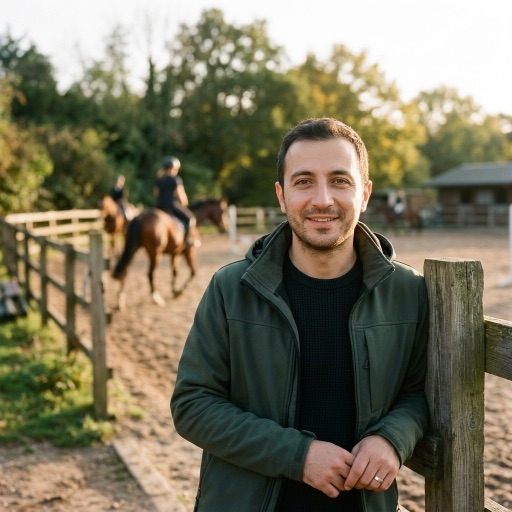
Deniz works on Gallopa's gait detection, the system that turns GPS and motion data into walk, trot, canter and gallop minutes. A later-in-life rider who came to horses through sport science, he writes about speed, measurement and what ride data can and cannot tell you, and spends his testing hours in the saddle with a phone in every pocket.